
At Blueprint in Las Vegas, AI was everywhere. Some of what I saw was useful. Some of it felt like a faster way to do something that was already broken.
That distinction matters in real estate. Put AI on top of a poor product or a weak process and you may get an answer sooner, but you have not necessarily made a better decision.
I spent two days meeting people across the industry, including teams at four of the ten largest US home builders. One detail kept coming up: they still use Excel for their development pro formas. For my UK readers, think of the appraisal that sits at the heart of a land decision.
There is increasingly sophisticated technology before that model, helping teams find and assess potential sites. There is technology after it, helping information move through the business. Yet the financial decision in the middle often remains a spreadsheet passed between people.
From answers to outcomes
Real estate companies are already automating document review, summaries and other repetitive work. These tools can save time, but most still stop at an answer: here is what the document says, or here are the parcels that match your search.
The next step is an outcome. A land team should be able to move from a set of possible parcels to a consistent financial review, a shortlist worth investigating and a clear basis for deciding what to do next.
That requires more than adding an AI interface to a spreadsheet. The assumptions, calculations and handoffs underneath it need to be dependable. Otherwise automation simply moves uncertainty through the process more quickly.
The pro forma is the bridge
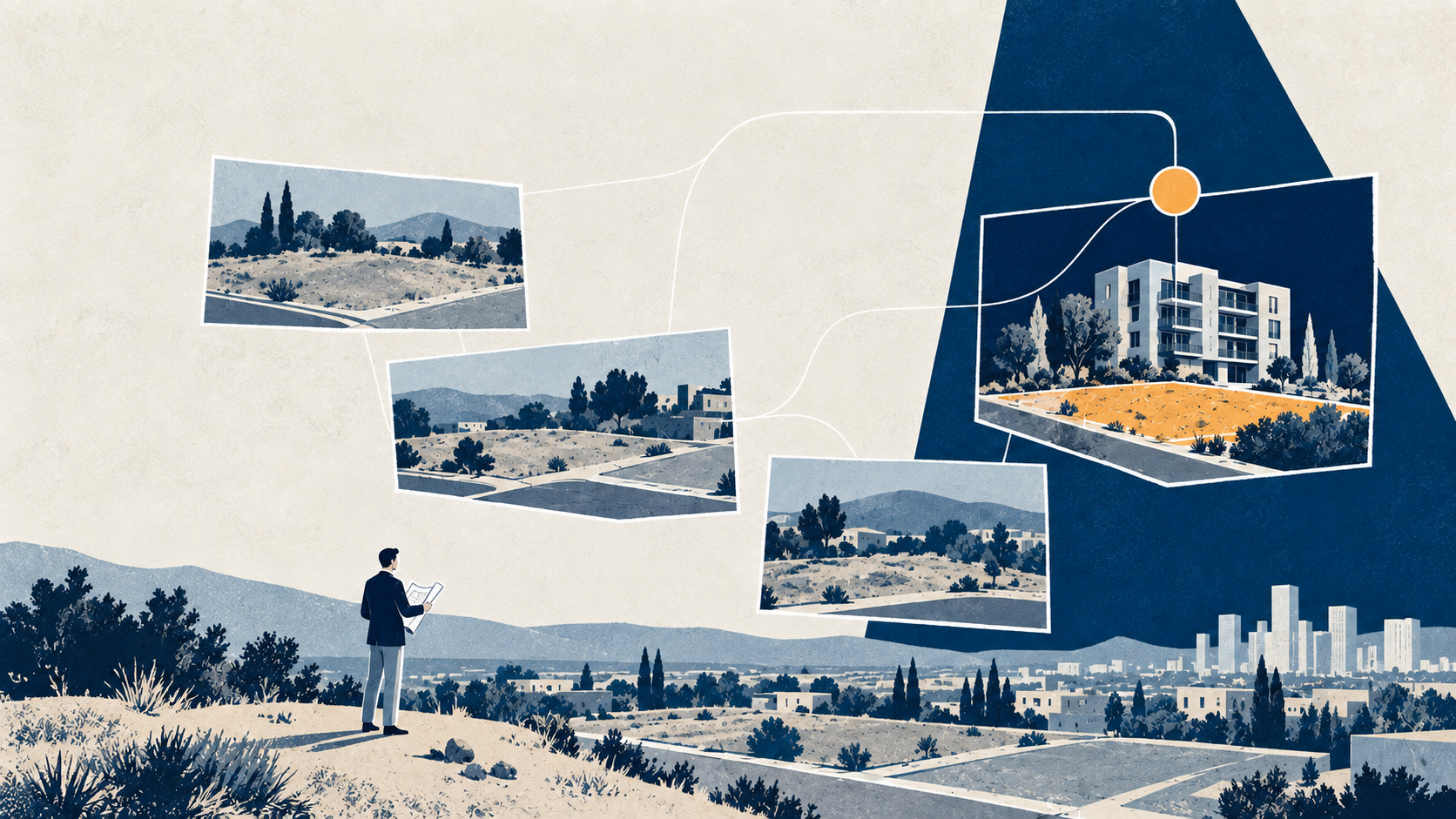
A better workflow could connect the tools a team already uses to find land with a structured development pro forma. Potential sites could be reviewed consistently, promising opportunities brought to the land team, and the financial assumptions made available for people to challenge and refine.
The team could then develop a purchase offer, produce a clear report for sign off and hand the approved opportunity to the next stage of the business.
That is the direction we are working towards with Aprao: making it easier to review more opportunities without losing the financial discipline behind each decision. More sites assessed should mean a better chance of finding the right ones, not a larger pile of automated recommendations.
Keep people on the ground
There is another risk alongside the spreadsheet problem. As more of the early work happens at a desk, the next generation of real estate professionals could become too comfortable evaluating places they have never seen.
A model can test assumptions. A summary can surface a planning constraint. Neither replaces walking a site, understanding its surroundings, noticing what the data missed or talking to the people who know the area.
The best use of automation is to give land teams more time for that work. Let technology handle repeatable analysis and prepare decisions. Keep professionals responsible for checking the opportunity with their own eyes and making the call.
Blueprint made the gap clear to me. The industry has plenty of tools that produce information. The opportunity now is to connect that information to a reliable financial decision and to the person who will stand on the site and own it.