
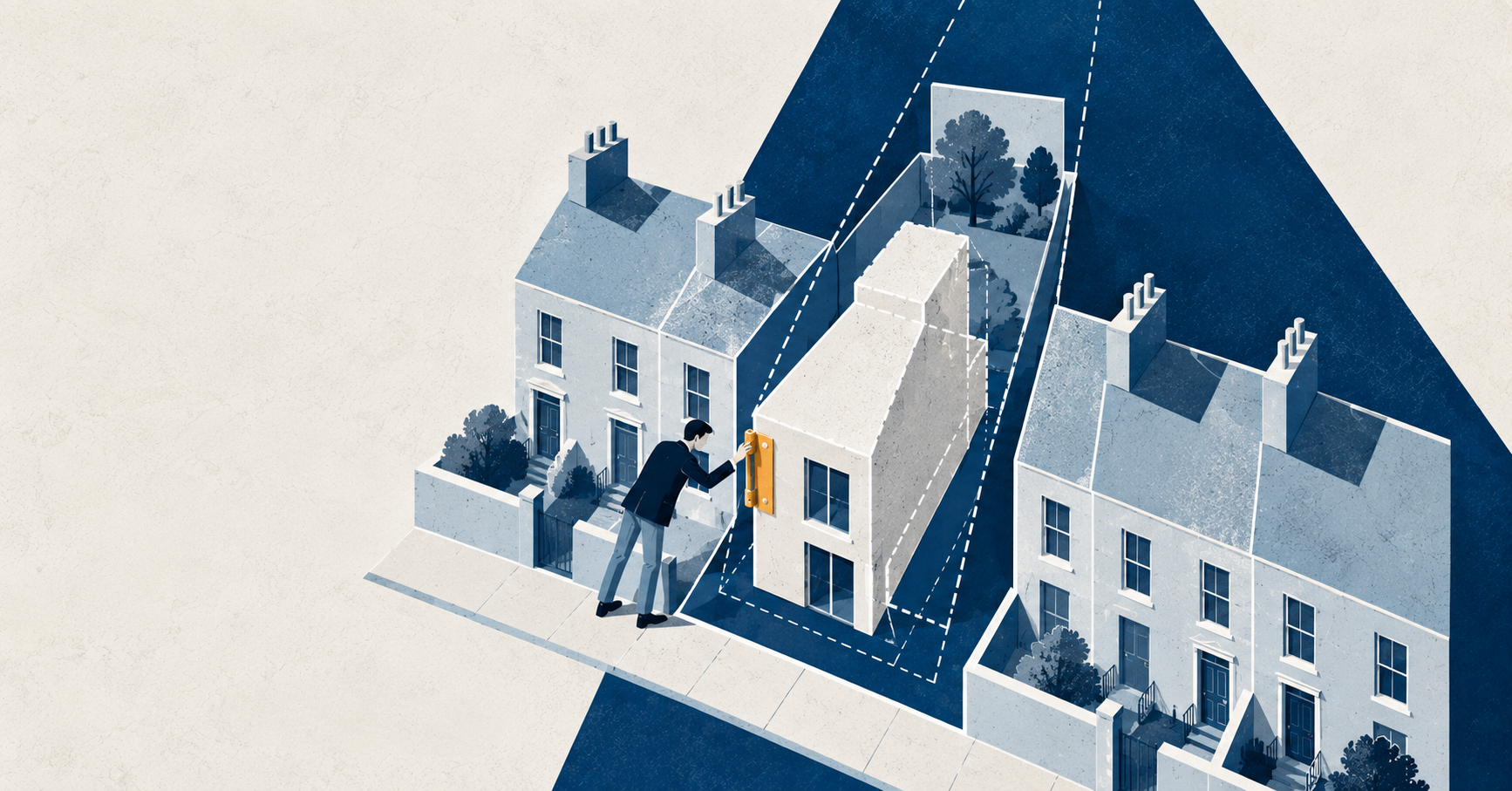
The gap between what it costs to build homes and what buyers will pay for them is changing the land market. A site can have planning potential, a compelling location and a clear need for housing, yet still struggle to support the scheme proposed for it.
Savills’ August 2026 analysis puts viability at the centre of developers’ decisions about what to buy, how much to pay and when to proceed. For anyone assessing residential opportunities, the question is no longer simply whether a scheme could be built. It is whether the scheme can absorb its likely costs, timing and sales risk and still be delivered.
Land values are absorbing the pressure
The cost side of an appraisal has moved sharply. Savills cites a Home Builders Federation estimate that building a home in England costs around £76,000 more than it did five years ago. Materials, labour and regulatory requirements contribute to that increase. Meanwhile, higher mortgage costs and weaker confidence have limited the scope for selling prices to make up the difference.
That pressure feeds back into what developers can offer for land. Savills reports that UK greenfield land values fell 1.2% in the second quarter of 2026 and 3.3% over the year. Urban land values fell 2.1% in the quarter and 6.6% annually. These are market averages, not a valuation for any particular site, but they show where the adjustment is taking place.
An asking price rooted in an earlier set of build costs, sales values or finance assumptions may no longer support a deliverable scheme. The appraisal needs to explain that gap clearly enough for landowners, developers and funders to make a decision.
Complexity has a price and a timetable
The problem is sharper on sites with remediation, substantial infrastructure or demanding approvals. Savills says brownfield values are around 17% below their 2022 peak and notes that additional approval time and cost for high-rise schemes have dampened appetite for some urban projects.
Those risks should be visible before a team commits heavily to a design. A longer programme can increase finance costs and delay receipts. A change in height, density or tenure can alter both cost and revenue. A seemingly small movement in sales rate can change how long capital remains tied up.
This is why a single residual land value tells only part of the story. A useful feasibility exercise asks how the result changes if the programme slips, construction costs rise, sales take longer or a different mix is required. It should identify which assumption actually controls the decision.
Smaller developers have less room for error
Savills finds that sentiment has weakened most among housebuilders delivering fewer than 75 homes a year. Its analysis of NHBC site data suggests sales rates for this group have fallen below 0.3 sales per outlet per week. Slower absorption matters when a business has less purchasing power, fewer sites over which to spread risk and less flexibility in its supply chain.
For a smaller developer, the practical response is to test the downside before treating an attractive base case as a green light. What happens to the land bid if completions slip? How much contingency remains after abnormal costs? Is a conditional contract or deferred payment structure appropriate for the uncertainty on this site? Those are commercial questions to settle while terms and design can still change.
Keep the appraisal current as the scheme changes
Savills points to possible relief if build cost inflation eases, mortgage affordability improves and house prices grow steadily. Its cited BCIS forecast has annual build cost inflation easing from 3.2% to around 2.0% by the end of 2026. That would help, but it is not a sound reason to assume a difficult scheme will repair itself.
A more resilient approach is to revisit feasibility at each consequential decision: the first land bid, revised planning parameters, changes to specification, updated contractor pricing and the proposed delivery programme. Keep the assumptions visible, compare scenarios on the same basis and record why the preferred option still works.
The projects that move forward will be those whose risks can be understood, priced and managed. Viability is therefore more than a hurdle at the start. It is the discipline that connects a site’s potential to a scheme that can actually be delivered.
Source: Savills, “Why viability is now the defining challenge for residential development,” 27 August 2026. The appraisal recommendations above are Aprao’s interpretation of the research.