
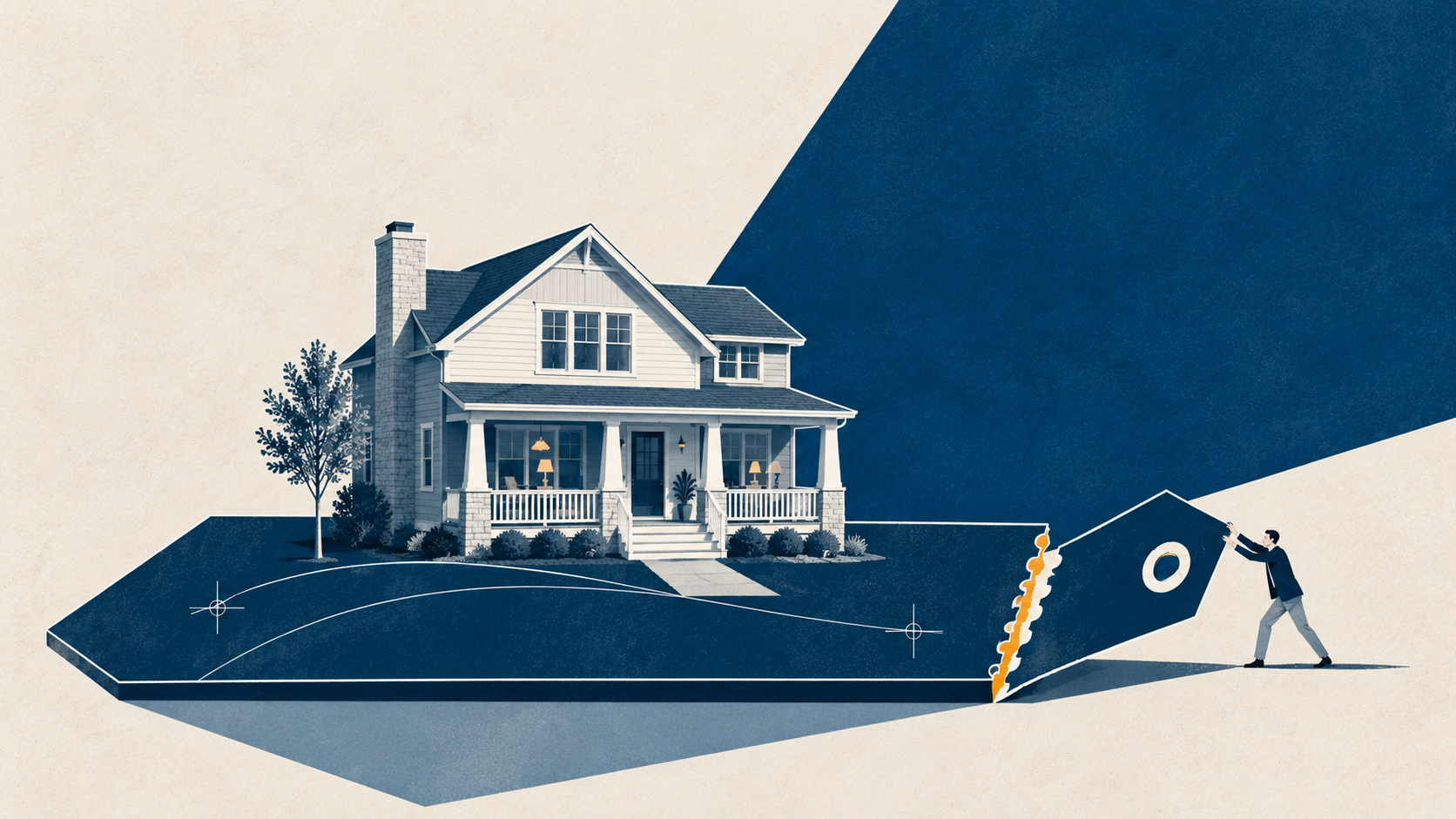
The builder across the street just closed at $500,000. You put the sale in your comp sheet and use it to price the 40 homes you plan to build next door.
Suppose that builder paid $15,000 to buy down the buyer’s mortgage rate. The $500,000 comp is accurate. So is the $485,000 the builder took in before other selling costs. Use the first number in your pro forma and leave out the buydown, and you’ve penciled in $600,000 more than you’ll collect if it takes the same offer to sell your homes.
By the time your sales team discovers that, you may already own the land.
What did it take to close next door?
In November 2026, 68% of builders surveyed by the National Association of Home Builders said they offered sales incentives. It was the 20th straight month that at least 60% had done so. For a land team bidding today, that’s reason enough to ask about concessions on every comp that carries weight in the offer.
One detail worth asking about is whether the home was finished when the buyer signed. In September, Zonda found that 82% of new-home communities advertised incentives on quick move-in homes, compared with 63% on homes still to be built. Those figures cover publicly advertised offers. The terms of an individual closing still take a phone call.
Say your best comp was a finished spec home that sat for three months. Your second-best comp was a presale of the same floor plan. Call the selling agents. Ask what the builder contributed on each sale, whether the offer was tied to a particular lender, and how long the finished home took to go under contract. Those answers help you decide which comp belongs in your first phase and what to budget for the last few homes.
What would the buydown have to earn back?
Take the same illustrative 40-home project. Assume $20 million in gross sales, $14 million in costs before land, incentives and carrying costs, and a target profit of $4 million, or 20% of gross sales. That leaves $2 million for land, incentives and carry combined.
Now put two sales assumptions in front of the acquisitions committee. In the first, the team holds price and accepts a slower sellout. In the second, it spends $15,000 per home on buydowns and closes faster. Then run the case that matters most before signing the land contract: the team offers the buydown and buyers still take their time.
| Illustrative scenario | Total buydowns | Total carrying costs | Maximum land bid at target profit |
|---|---|---|---|
| Slower closings, no buydown | $0 | $800,000 | $1,200,000 |
| Faster closings with a buydown | $600,000 | $450,000 | $950,000 |
| Slower closings despite the buydown | $600,000 | $800,000 | $600,000 |
The faster sellout saves $350,000 in carry. That covers a little over half the buydown bill. Even if the sales team delivers the faster pace, the site supports a $250,000 lower bid than the slower case without incentives. If the buydown is necessary just to achieve the slower pace, the supportable bid falls to $600,000.
The assumption to challenge is whether the homes would sell at $500,000 without the credit. If every comparable closing needed one, the $1.2 million bid rests on a sales strategy the team has yet to prove.
Put the sales assumption next to the offer
The carrying costs above are illustrative. For a live bid, have the sales team lay out expected closings by month. Use that schedule to model construction draws, loan paydowns and the cost of holding completed inventory. It’s worth getting current terms from the lender: in the third quarter of 2026, builders and developers surveyed by NAHB reported tighter acquisition, development and construction credit for the 19th consecutive quarter.
Before the offer goes out, put one sentence beside the proposed land price: “This bid assumes we can close ___ homes a month at $___ per home after buyer incentives.” Send it to the person who will have to sell those homes. If they change either number, rerun the land bid while it’s still yours to change.